Understanding How RCA Cables Affect Car Audio Sound Quality
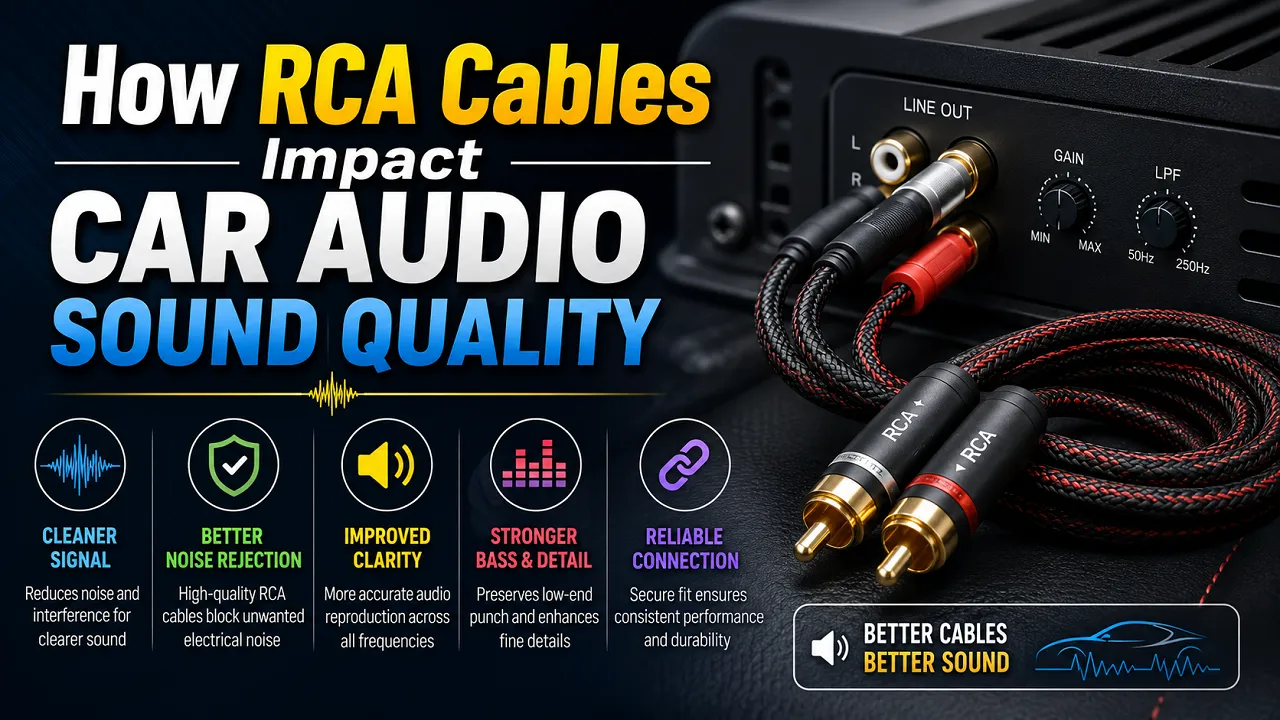
A high-quality car audio system is built on more than powerful amplifiers and premium speakers. Understanding how RCA cables affect car audio sound quality is essential if you want to achieve clean, detailed audio without unwanted interference. Whether you’re searching for the best RCA cables for car audio, learning why car audio RCA cable shielding matters, trying to eliminate RCA cable noise interference, or choosing RCA cables for amplifiers that match your setup, selecting the right interconnects can significantly improve signal clarity, reduce distortion, and help every component in your sound system perform at its full potential.
Whether you’re upgrading a factory stereo or building a custom sound system, investing in proper car audio RCA cable shielding, reducing RCA cable noise interference, and choosing RCA cables for amplifiers carefully can significantly improve your listening experience.
What Do RCA Cables Do in a Car Audio System?
RCA cables are responsible for transferring low-voltage audio signals between your source unit, DSP, equalizer, and amplifier. Since these signals are relatively weak, they require a clean transmission path to preserve every detail before amplification.
Unlike speaker wires, which carry amplified power, RCA interconnects transport sensitive analog signals. Even small amounts of electrical interference can affect sound quality before the signal reaches the amplifier.
Why Signal Quality Is Critical Before Amplification
An amplifier can only reproduce the audio signal it receives. If unwanted interference enters the RCA cable, the amplifier increases the volume of both the music and the noise.
This is why professional installers focus on maintaining a clean signal path throughout the system. Protecting the signal before amplification helps preserve accurate vocals, detailed instruments, and balanced sound reproduction.
Common Symptoms of Poor-Quality RCA Cables
Inferior RCA cables often create problems that many people mistakenly blame on speakers or amplifiers.
Typical warning signs include:
- Alternator whine that changes with engine speed
- Constant background hiss
- Static or buzzing noises
- Uneven left and right channel output
- Reduced clarity at higher frequencies
- Intermittent audio dropouts
If these issues remain after checking your amplifier settings and grounding, your interconnect cables may need attention.
How Electrical Interference Reduces Sound Quality
Vehicles are filled with electrical components that generate electromagnetic interference (EMI). Alternators, ignition systems, fuel injectors, cooling fans, and electronic control modules all create electrical noise while the vehicle is operating.
Because RCA cables often run several feet from the dashboard to amplifiers installed beneath seats or inside the trunk, they can collect this interference if they are not adequately protected. Excessive RCA cable noise interference can reduce clarity and introduce unwanted sounds into your music.
Why Car Audio RCA Cable Shielding Matters
Effective car audio RCA cable shielding acts as a barrier that protects the audio signal from surrounding electrical fields.
Premium RCA cables typically include one or more of the following:
- High-density braided shielding
- Aluminum foil shielding
- Dual-layer shielding
- Twisted-pair conductor construction
These shielding methods help block interference before it reaches the internal conductors, allowing your audio system to reproduce cleaner, more accurate sound.
How Twisted-Pair Construction Improves Signal Integrity
Many of the best RCA cables for car audio feature twisted-pair conductor designs.
Instead of running side by side, the positive and negative conductors are twisted together throughout the cable. This design naturally cancels much of the electromagnetic interference that develops along the cable’s length.
When combined with high-quality car audio RCA cable shielding, twisted-pair construction provides excellent protection against noise, especially in systems with long cable runs.
Why Cable Capacitance Affects Audio Performance
Another factor that influences how RCA cables affect car audio sound quality is capacitance.
Every cable stores a small electrical charge between its conductors. When capacitance is too high, it can gradually reduce high-frequency information as the signal travels to the amplifier.
The result may be softer vocals, less detailed cymbals, and reduced overall clarity.
The best RCA cables for car audio are engineered with low-capacitance designs, premium insulation materials, and optimized conductor spacing to preserve audio detail across the entire frequency range.
Why Connector Quality Deserves Equal Attention
The cable itself is only part of the equation. Its connectors also play an important role in maintaining a stable signal.
Poorly manufactured connectors can loosen over time due to constant vehicle vibration, causing intermittent signal loss and increased electrical resistance.
When choosing RCA cables for amplifiers, look for connectors that offer:
- Secure, tight-fitting connections
- Gold-plated terminals that resist corrosion
- Strong soldered or precision-crimped internal joints
- Built-in strain relief for long-term durability
The best RCA cables for car audio combine durable connectors, effective shielding, and low-capacitance construction to deliver consistent performance. By choosing RCA cables for amplifiers carefully, you can reduce RCA cable noise interference, improve overall system reliability, and better understand how RCA cables affect car audio sound quality in real-world driving conditions.
When Upgrading RCA Cables Makes the Biggest Difference
Not every car audio system requires expensive interconnects, but there are situations where upgrading can produce noticeable improvements. Understanding how RCA cables affect car audio sound quality helps you determine whether your current cables are limiting your system’s performance.
You may benefit from higher-quality interconnects if your vehicle has:
- Long cable runs between the dashboard and the amplifier
- Multiple amplifiers or a DSP
- High-gain aftermarket amplifiers
- Persistent engine noise or electrical interference
- A high-resolution audio source
In these situations, car audio RCA cable shielding becomes even more important because longer cable runs are more likely to pick up unwanted electrical noise.
Choosing the Right RCA Cables for Your Audio System
Not every cable on the market offers the same level of performance. Instead of focusing only on brand names or price, evaluate the cable based on its construction and the requirements of your installation.
When choosing RCA cables for amplifiers, consider the following features:
- Dense braided or dual-layer shielding
- Twisted-pair conductor design
- Low-capacitance construction
- Oxygen-free copper conductors
- Gold-plated connectors
- Durable outer insulation
The best RCA cables for car audio balance performance, durability, and value. Selecting the right cable helps reduce RCA cable noise interference while maintaining accurate signal transmission throughout the system.
Avoid Buying Based Only on Price
Many people assume the most expensive cable automatically delivers the best sound quality. In reality, your choice should depend on your system’s design.
For a basic audio upgrade with short cable runs, a well-constructed mid-range cable may perform just as well as a premium model. However, larger installations with multiple amplifiers often benefit from the additional protection offered by the best RCA cables for car audio.
Installation Tips to Minimize RCA Cable Noise Interference
Even premium cables can perform poorly if they are installed incorrectly.
To reduce RCA cable noise interference, follow these best practices during installation:
- Route RCA cables away from power wires whenever possible.
- Avoid running signal cables alongside battery cables.
- Secure cables to prevent vibration and unnecessary movement.
- Inspect connectors to ensure they fit tightly.
- Replace cables immediately if they become damaged or pinched.
Proper installation works together with quality car audio RCA cable shielding to deliver the cleanest possible signal to your amplifier.
Signs It’s Time to Replace Your RCA Cables
Over time, RCA cables can wear out due to vibration, heat, and repeated installation.
You should inspect or replace your cables if you notice:
- Alternator whine that wasn’t previously present
- Crackling or popping sounds
- Intermittent loss of audio
- One channel becoming quieter than the other
- Visible damage to the cable jacket or connectors
- Reduced overall clarity
If grounding and amplifier settings have already been checked, replacing worn interconnects is often the next logical troubleshooting step.
Understanding how RCA cables affect car audio sound quality allows you to make smarter decisions when upgrading your vehicle’s sound system. Although RCA cables don’t produce sound themselves, they play a crucial role in preserving the low-level audio signal before it reaches the amplifier.
By investing in proper car audio RCA cable shielding, reducing RCA cable noise interference, and choosing RCA cables for amplifiers that match your installation, you can improve clarity, minimize unwanted noise, and maximize the performance of your audio equipment.
Whether you’re building a basic aftermarket stereo or a competition-level system, selecting the best RCA cables for car audio helps ensure every component performs as intended.
Frequently Asked Questions
Do RCA cables really affect car audio sound quality?
Yes. Understanding how RCA cables affect car audio sound quality is important because these cables carry low-level audio signals that are sensitive to electrical interference. High-quality cables help preserve signal integrity and improve overall sound clarity.
Can poor RCA cables cause alternator whine?
Yes. Inadequate car audio RCA cable shielding allows electrical interference from the alternator and other vehicle electronics to enter the audio signal, creating a whining noise that changes with engine speed.
What are the best RCA cables for car audio?
The best RCA cables for car audio typically feature low-capacitance construction, dense shielding, twisted-pair conductors, oxygen-free copper, and durable gold-plated connectors. These features help deliver a cleaner signal with less interference.
How do I reduce RCA cable noise interference?
To minimize RCA cable noise interference, use quality shielded cables, separate RCA cables from power wires, secure all connections, and ensure your amplifier and head unit are properly grounded.
What should I consider when choosing RCA cables for amplifiers?
When choosing RCA cables for amplifiers, prioritize effective shielding, low capacitance, durable connectors, and the correct cable length. These factors help maintain signal quality and improve long-term reliability.
Are expensive RCA cables always worth the money?
Not always. The best RCA cables for car audio are those that match your system’s requirements. A well-designed mid-range cable may perform just as effectively as a premium model in many installations.
How long do RCA cables typically last?
High-quality RCA cables can last for many years if installed correctly and protected from physical damage. Regular inspections can help identify worn connectors or damaged insulation before they begin affecting sound quality.